In this guide, we present a side-by-side comparison of cedar shingles and shakes vs. asphalt roofing, with focus on material composition, installation costs, plus pros and cons and ROI of each option. Let’s get started!
The Difference Between Wood Shingles & Cedar Shakes
When used in roof covering, wood can be either shakes or shingles. Wood shakes have been used for centuries. They are split from logs and often left as split to retain the textured, rough-hewn effect.
A wood shake is instantly recognizable by its thick butt end. With the advent of commercial sawmills, a wood shake was often sawn after splitting to achieve a uniform back side.
These sawmills also produced a completely uniform product with an even taper and identical thickness by sawing shakes on both sides. This manufactured product is known as a wood shingle.
California redwood, western red cedar, cypress, spruce, and pine are all used to manufacture wood shakes and shingles. Cedar is the most popular wood for shakes, southern yellow pine is also popular. Wood shakes and shingles can be pressure treated with fire retardants and chemical preservatives.
When building a new house or retrofitting an existing one, choosing the right type of a roof shape and style can be more difficult than most people realize.
Curved shed roof with standing seam panels on a ranch home.
Roofs do a lot more than just serving the most basic practical purpose of protecting a house and its occupants from the outside elements.
For instance, a roof’s shape plays a major role in defining the overall look and style of a house. Roofs can also provide additional living space, as well as make your home more resilient, energy efficient, and weather-proof.
This definitive guide to roof architecture and styles will help you understand and identify the best roof shape for your home, shed, garage, or a place of business. We will also explore recommended roofing materials for the common roof types.
Also known as pitched or peaked roof, gable roofs are some of the most popular roofs in the US. They are easily recognized by their triangular shape.
Pros: Gable roofs will easily shed water and snow, provide more space for the attic or vaulted ceilings, and allow more ventilation. Their inherently simple design makes it easy to build them and cheaper than more complex designs.
Cons: Gable roofs can be problematic in high wind and hurricane areas. If the frames are not properly constructed with adequate supports, the roof can collapse.
High winds can also cause materials to peel away from gable roofs. If there is too much of an overhang, winds can create an uplift underneath and cause the roof to detach from the walls.
Hurricane roof bracing and strapping for wind mitigation in Florida
If a gable roof is used in high wind areas, be sure proper braces are used and have the roof inspected after a large storm to ensure no damage has occurred.
However, if the roof also contains hips and valleys, it should either be shingled or roofed with metal shingles or standing seam to help prevent roof leaks.
Note: It is recommended to use at least a 10/12 pitch or 40° angle, for snowy regions.
Types of Gable Roofs
Side Gable: A side gable is a basic pitched roof. It has two equal panels pitched at an angle, meet at a ridge in the middle of a building. The triangle section can be left open for an open gable roof, or it can be enclosed for a boxed gable roof.
Crossed Gable: A crossed gable roof is two gable roof sections put together at a right angle. The two ridges are perpendicular to each other. Lengths, pitches, or heights may or may not differ from each other.
Cross-Gable Roof with Dormers covered by slate tiles
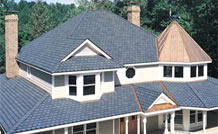
New Shingle Roof
$7,500 Average price
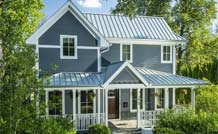
New Metal Roof
$14,500 Average price
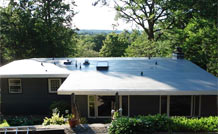
New Flat Roof
$8,225 Average price
See costs in your area
Enter Your Zip Code
It’s an excellent roof design for homes with separate wings. Use a cross gable to accent different areas of the home, such as the garage, porch, or dormers.
It’s often seen in Cape Cod and Tudor styles houses.
Front Gable: A front gable roof is placed at the entrance of the house. This design is often seen in Colonial style houses.
Dutch Gable Roof: A Dutch gable is a hybrid of a gable and hip roof. A gable roof is placed at the top of a hip roof for more space and enhanced aesthetic appeal.
This comprehensive guide to roofing materials is all the research you’ll need to evaluate the top choices for residential re-roofing and new construction projects.
What to Expect: In this guide, we’ll cover the following most common roofing options: asphalt shingles, cedar wood shingles and shakes, metal shingles and standing seam metal roofs, concrete, clay, and fiber-cement tiles, natural stone and faux slate/synthetic shingles, and the latest BiPV solar tile options.
A new asphalt shingle roof with PV solar panels
Need a Roofer?Get 4 Free Quotes From Local Pros:
Enter Your Zip Code:
For each material, we cover the following topics:
An overview including how the roofing is made
Pros and cons including maintenance, repair, durability, options, home styles they work with and more
Cost for materials and installation
Choosing your roofing material: The “bottom line” summaries of each type
How to save money on a new roof
Types and Styles of Roofing Materials
The material options presented below cover more than 95 percent of all residential roofs in the United States. So, unless you’ve got something unusual in mind like BiPV solar tiles – oh, wait, we’ve included those – or a vegetative green roof, the options you’re considering are likely discussed below
More than 75 percent of all single-family homes in the US are covered with asphalt shingles, though that number is slowly shrinking thanks to the more energy-efficient and durable options like metal.
Average Roof Replacement Cost:
Low End
$8,500
Mid-Range
$10,500
High End
$14,500
See costs in your area
Enter Your Zip Code
Asphalt (composition) shingles dominate the market because they are affordable, offer a variety of attractive options, and do a good job protecting homes from the nature’s elements.
There are two main types of asphalt shingles:
Fiberglass shingles start with a fiberglass mesh mat that is covered in asphalt and topped with granules that provide color and reflect some of the sunlight. Shingles made with fiberglass are lightweight and resist tearing.
Old-school organic asphalt shingles (almost non-existent today) would normally have paper, an organic material, saturated in asphalt and covered with granules. The shingles are heavier and harder to work with than fiberglass, but they generally offer better stability in high winds. Although you can still see them on many roofs, organic shingles have been mostly phased out or discontinued over the course of last decade. Why? Manufactures have stopped making organic shingles due to their tendency to dry out, become less-waterproof and more prone to excess moisture absorption.
Pros and Cons
The advantages of asphalt shingles are:
Fiberglass shingles offer good fire protection
Look good on most any style home
Shingles are often the most affordable roof covering option, especially in good/better ranges
The best asphalt shingles are a 30-year roof solution installed on homes located in moderate climates
The cheapest 3-tab shingles are an affordable way to dress up a home before putting on the market
Broad selection of colors and styles including affordable three-tab and architectural shingles that mimic shakes and slate
DIY asphalt shingle installation is possible for those with good skills, experience, and equipment
No support beyond standard roof sheathing is required for shingles
3-tab shingles are rated for 60-70 MPH wind uplift, while standard architectural shingles are rated for 110 MPH winds; high-wind shingles are rated for 130 MPH
High-impact shingles such as the ones manufactured by GAF should be used for heavily wooded locations and areas where large hail is possible
While the asphalt shingle industry boasts that its products can be recycled for paving, few recycling facilities take asphalt shingles, and they are among the least eco-friendly roofing options
After a second layer of shingles needs replacing, all layers must be torn off the roof, creating extra expense and a lot of potential landfill waste
Mold or algae can be a problem on shingles in shady areas, unless treated with anti-algae/anti-stain treatments
Organic/felt shingles are heavy; getting them to the roof in bundles can be a challenge
New Shingle Roof
$7,500 Average price
New Metal Roof
$14,500 Average price
New Flat Roof
$8,225 Average price
See costs in your area
Enter Your Zip Code
Wood Shingles and Shakes
Wood delivers a natural dose of beauty to any roof. Cedar, redwood, cypress, and pressure-treated pine shingles and shakes are available.
How are wood shingles and shakes different?
Wood shingles are machine-cut and feature cleaner edges and a smooth surface to produce a more uniform appearance.
Wood shakes are hand-cut from blocks of wood, so have a more rustic appearance. They’re thicker too, so slightly more expensive than wood shingles.
Pros and Cons
The advantages of wood shingles and shakes are:
Wood has natural beauty that ranges from rustic shakes to handsome, neat shingles
Cedar and redwood contain oils that make them naturally resistant to moisture and insects
Treated wood shingles have a Class A fire rating
Cedar shingles and shakes can last 5 to 10 years longer than asphalt when properly maintained, which makes them competitively priced with asphalt over their lifespan
Wood has an insulation value twice that of asphalt shingles. However, your home’s insulation levels including walls and attic are far more important than the R-value of the roof covering
Many shakes and shingles are made from salvaged trees – those that have fallen over from age or were toppled by storm
Wood is recyclable into wood chips, mulch, or compost
They enhance a range of architectural styles including Tudor, Victorian, Cape Cod, bungalow and cabin/cottage
Keep these potential disadvantages in mind:
Non-treated materials have a Class C fire rating, but wood can cedar shingles and shakes are also available as a more-costly treated option
Wood roofing is prohibited in some areas prone to wildfire, so be sure to check with your building department first
Untreated wood shakes and shingles are high maintenance – they need to be cleaned consistently to prevent the growth of algae or moss, and debris needs to be cleared to allow the wood to breathe
While DIY installation is possible if you have good experience, faults in the installation can lead to quick deterioration of the roof which often includes serious leaks
Staining of the shingles and shakes might occur as natural factors cause tannins to be released from the wood
While wood is quite durable, but repairs will be expensive if they are required

 Source: Kuhl’s Contracting


 New Shingle Roof
 New Metal Roof
 New Flat Roof
 See costs in your area


