Most Affordable Roofing Materials for Homes – Are Cheap Roofs Worth it?

The most affordable roofing materials for your home are 3-tab asphalt shingles and basic dimensional shingles. The cheapest roofing material of all is rolled asphalt roofing. Corrugated steel is somewhat less affordable, but lasts longer than asphalt roofing, so the lifetime value is better.

In this guide, we explore inexpensive roofing options for homes, with focus on viability and practicality, value and installed cost, top products and brands, and expected performance.

Most Affordable Roofing Options: Cost Comparison

Materials Installed Cost per Sq. Ft. Cost for 2,000 Sq. Ft. Roof
Asphalt Roll Roofing $2.50 – $3.50 $5,000 – $7,000
3-tab Asphalt Shingles $5.00 – $8.50 $10,000 – $17,000
Dimensional Shingles $6.00 – $10.00 $12,000 – $20,000
Corrugated Steel Roofing $7.50 – $12.50 $15,000 – $25,000
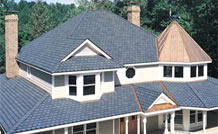
New Shingle Roof

$7,500
Average price
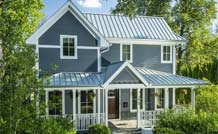
New Metal Roof

$14,500
Average price
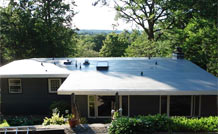
New Flat Roof

$8,225
Average price

See costs in your area Enter Your Zip Code

3-tab Asphalt Shingles

CertainTeed XT 25 3-tab strip shingles available in nearly 30 colors

The most popular cheap roofing material for residential use is 3-tab shingles, also called strip shingles.

These shingles are a single piece of material, a fiberglass mesh core coated with asphalt and topped with tinted ceramic granules. The granules give the shingle its color and reflect sunlight to help limit how hot the roof gets.

The lower half of the shingle is cut to create three separate tabs, and hence the name.

The installed cost of 3-tab asphalt shingles is $5.00 to $8.50 per square foot or $500 to $850 per roofing square (100 square feet). For most homes measuring 1,500 to 2,500 square feet, the total cost will range from $7,000 to $17,000, depending on the roof shape, accessibility, and location.

Cost Factors: The cost of a 3-tab asphalt shingle roof depends on whether you tear off the old roofing material or install the new shingles over the existing shingles. In most cases, you can add a second layer of asphalt shingles before having to do a tear off.

If starting with a bare roof deck, your choice of underlayment, water/ice barrier, ridge vent, and other accessories have a minor impact on the total cost. The largest potential cost factor is DIY installation, which could save you anywhere from $3.00 to $5.00 per square foot. However, before you go the DIY route, consider any local building code requirements, permitting and job inspection requirements, OSHA safety requirements, product warranty considerations, etc.

Read more

Top 15 Green Home Improvements: Costs – Home Energy Efficiency

All major home remodeling efforts demand careful consideration and planning. When tackling an energy efficient home upgrade, that task can truly expand exponentially. It is imperative that you utilize a whole-house system approach to the project to wring the most value from your efforts.

Did you know? Home Energy savings realized in one segment of your property can easily be gobbled up by neglecting to pay attention to other energy-sapping culprits — With that in mind, let’s look at some of the popular energy-saving home improvement projects and take a stab at evaluating their value…

1. Smart Home Energy Audit

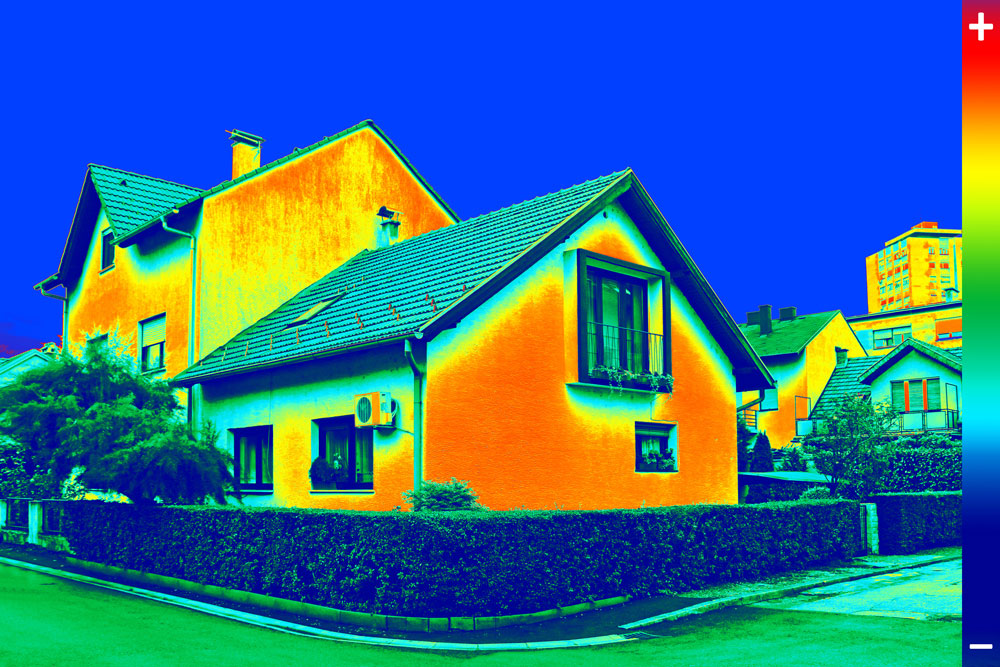
energy-audit-thermal-image via Henges Insulation

Your first step is to engage a professional energy audit of your house ($300-$500 by a trained energy expert although you may be able to wrangle one for less – or even free – from your local utility eager to reduce its power burden). This will factor into your home remodel plans such vital actors as site conditions, your local climate, your home’s micro-climate, the state of your current heating and cooling environment versus your required needs and so on.

Once the energy audit is complete, you will not only have specific goals for the reduced utility and home maintenance costs, but also ideas for a healthier and safer interior living environment that will increase the physical comfort, energy efficiency, and dampen noise levels.

A professional home energy audit should also include any local state incentives and tax breaks you are in line to receive for embarking on energy-saving projects.

A typical home energy audit will uncover opportunities to improve energy efficiency and comfort of your home by sealing the air leaks and drafts and upgrading the level of insulation in critical areas such as crawl spaces, wall cavities, and attic where there might be thermal energy loss due to inadequate insulation.

Read more

How to Prevent Ice Dams on the Roof

Winter season brings us heavy snowstorms, low temperatures, and ice dams. Are you one of the many homeowners who must worry about the unsightly ice dams and icicles hanging down from the eaves of the roof and causing damage to the roof, gutters, and your home this winter?

Need a Roofer? Get 4 Free Quotes From Local Pros:

Enter Your Zip Code:

Why Ice Dams are Dangerous

The major issue with ice dams on the roof, is that they trap the melting water running down from the top of the roof, and thereby cause it (the melted water) to rise up underneath the roofing shingles, and eventually seep through the boards and walls inside our homes.

ice-dam-formation

What causes Ice Dams?

The heat from inside the house rises up into the attic space where it continues to rise reaching the apex of the roof. The warm air warms up the top of the roof, which causes the snow accumulated on top of the roof to melt. The melted snow turns into water that starts running down the roof surface underneath the snowpack. When the water reaches the colder edges at the bottom of the roof, it refreezes forming a wall of ice. This wall of ice is commonly referred to as an ice dam, because it traps the melting water like a dam.

Common Misconceptions:

Although, ice dams can sometimes reach the gutters, they do not form in the gutters, but rather they form at the eaves of the roof. If you can get your attic-space air temperature to stay at 30° F, or lower (during heavy snow fall accompanied by low temperatures), then you should be able to eliminate ice dams from happening in the first place.

Read more