
In this guide, we present a side-by-side comparison of cedar shingles and shakes vs. asphalt roofing, with focus on material composition, installation costs, plus pros and cons and ROI of each option. Let’s get started!
The Difference Between Wood Shingles & Cedar Shakes
When used in roof covering, wood can be either shakes or shingles. Wood shakes have been used for centuries. They are split from logs and often left as split to retain the textured, rough-hewn effect.
 Source: Kuhl’s Contracting
Need a Roofer? Get 4 Free Quotes From Local Pros:
Enter Your Zip Code:
A wood shake is instantly recognizable by its thick butt end. With the advent of commercial sawmills, a wood shake was often sawn after splitting to achieve a uniform back side.
These sawmills also produced a completely uniform product with an even taper and identical thickness by sawing shakes on both sides. This manufactured product is known as a wood shingle.
California redwood, western red cedar, cypress, spruce, and pine are all used to manufacture wood shakes and shingles. Cedar is the most popular wood for shakes, southern yellow pine is also popular. Wood shakes and shingles can be pressure treated with fire retardants and chemical preservatives.
Types of Asphalt Shingles
Asphalt or composition shingles are most commonly constructed from organic material or fiberglass. Asphalt shingles are built upon a base or mat that was originally made of absorbent cotton rags.

Later, more readily available wood pulp or paper replaced the natural fibers. Asphalt was poured onto that base, known as “felt”.
In the 1970s, fibrous glass was introduced, which did not rot like the organic materials. Today, 95 percent of asphalt shingles feature fiberglass felt.
Average Roof Replacement Cost:
|
Low End
$7,500Mid-Range
$10,500High End
$14,500 |
|
|
 See costs in your area
Cedar Shingles/Shakes Cost Vs. Asphalt
In the roofing industry, an 18-inch wood shingle is referred to as “Perfection” and 24-inch-wide shingles are known as “Royal.” A wood shake is a premium product, costing around $3.75 to $4.50 per square foot versus $3.00 and $3.75 per square foot for wood shingles.

The most expensive option for shingling a roof is cedar shakes — between $10.50 to $18.50 per square foot or $1,050 and $1,850 per square (100 square feet), installed.
For a typical, 2,200 square foot roof on medium-sized home, your total cost for a new cedar shake roof could range between $23,100 and $40,700.

Wood shingles are slightly less pricey at $9.50 to $15.50 per square foot or $950 to $1,550 per square installed.
For a typical, 2,200 square foot roof on medium-sized home, your total cost for a new cedar shingles roof could range between $20,900 and $34,100.
For comparison, asphalt roofing can cost as little as $4.50 to $6.50 per square foot or $450 to $750 per square, installed.
For a typical, 2,200 square foot roof on medium-sized home, your total cost for a new 30-year architectural asphalt shingles roof could range between $9,900 and $16,500.

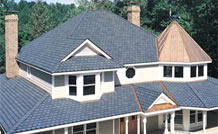 New Shingle Roof
$7,500 Average price |
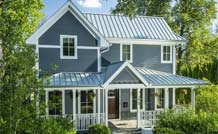 New Metal Roof
$14,500 Average price |
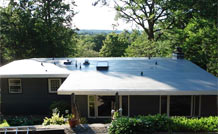 New Flat Roof
$8,225 Average price |
|
|
||
So, why do homeowners opt for the much more expensive wood shingling? The answer is…
Aesthetics
It is hard to beat the appearance of a natural wood roof. If you are making over a traditional older house, cedar roofing is probably the historically appropriate choice. Not that asphalt shingles are an unattractive alternative.
Asphalt shingles come in a wide variety of colors and shapes and patterned asphalt roofs can be eye-catching.
Beyond looking great, wood shingling does not win many comparison battles with its asphalt-covered competition. Let’s explore some of the pros and cons of cedar roofing.
Longevity
Life expectancy for both asphalt and wood shingles is a tricky matter. Let’s tick off all the factors that can affect the longevity of a roof covering: quality of installation, diligence of maintenance, quality of materials, age of the house, overhanging trees, climate and foot traffic.
Chemically treated wood will outlast untreated shakes and shingles and a shake will survive longer than a shingle. Both asphalt and treated wood shingles can survive up to 30 years on a roof, given ideal conditions.
Durability Cedar shingles are resistant to insects but not large amounts of rain. Cedar shakes in a damp environment are susceptible to mold and mildew and rot.
Sap from overhanging trees will encourage mildew. When rot sets in it has likely affected more than a single shake and the entire roof is a candidate for replacement.
Cleaning Costs
Asphalt has its own weather issues. Algae is more likely to take hold on an asphalt roof than cedar shakes. While this will not hamper your roof’s protection abilities, it does lead to unsightly staining and premature replacement on appearance grounds, especially at resale time.
Cleaning either an asphalt or wood shingle roof with a solution of water and bleach applied professionally and gently with a power washer will run from $25 to $45 per square. And this is a job best left to competent professionals as a poorly handled power washer can wreak havoc on roof shingles.
Flammability
Some building codes where fire is a danger restrict or ban the use of wood shingling altogether. Modern fiberglass asphalt shingles have a high resistance to flames.
Keep in mind that wood shakes and shingles can be pressure treated with fire retardants and chemical preservatives.
Wind and Hail Impact Resistance
Cedar shakes and shingles are the clear winner here. Both have proven to be highly hail impact-resistant and have been successfully tested to withstand wind speeds of up to 245 miles per hour (which your house will never see).
Asphalt shingles are not warrantied for hail damage, even if they are class 4 hail impact rated, could blow off in high winds. Fallen branches are also much more likely to damage an asphalt shingle roof that a wooden one.
Maintenance
Cedar is a high maintenance material. For starters, the wood needs to breathe, and the roof must be kept clear of leaves, branches and debris.
Gutters must be regularly cleaned, and ventilation kept open for air to flow around the shakes and shingles.
Topical treatments can be applied as water repellents and ultraviolet inhibitors that can prevent graying of a roof.
If individual shakes or shingles are required, they will match the composition and color of the original roof – score one point for cedar.
While algae will not impair the performance of asphalt shingles, mosses that grow on a damp roof can cause the edges to lift or curl leaving them vulnerable to a blow-off in storms.
Moss can be removed with a 50:50 mix of laundry-strength liquid chlorine bleach and water soaked with a low-pressure sprayer.
The moss will eventually loosen and can be swept off the roof. It will return, however, if many of the same measures as keeping a wood roof dry – trimming tree branches, removing debris and clearing gutters — are not followed. Replacing individual shingles is often a DIY job.
Metal Roofing
Flat Roof
$14,500
$8,225
ROI, Property Valuations, and Curb Appeal Considerations
In terms of property valuations, replacing a cedar roof with asphalt will instantly diminish the value of your property. — On some historic homes, as well as homes surrounded by other homes roofed with cedar, such as in historic districts/neighborhoods, this may not even be an option to begin with.
However, if you must replace a cedar roof with something else, then opting for a metal roof rather than asphalt will help preserve the valuation and curb appeal of your property.
Conclusion
On the cost and maintenance considerations – the “Big Two” for most homeowners – asphalt shingles are the clear choice over wood shakes.
And in fact, about 70 percent of all American roofs are covered with asphalt shingles today. On the other hand, those wood shingled roofs just look so darn good, don’t they? 😉
Need a Roofer? Get 4 Free Quotes From Local Pros:
Enter Your Zip Code:
FAQs
- What are asphalt shingles? Asphalt shingles are roofing materials made from a fiberglass mat or organic felt (no longer manufactured), coated with asphalt and ceramic granules to make them durable and weather-resistant.
- What are cedar shingles and shakes? Cedar shingles and shakes are wooden roofing materials made from split logs of cedar trees. Shakes are thicker than shingles and have a rougher texture.
- Which one is more expensive, asphalt or cedar roofing? Cedar roofing is generally more expensive than asphalt roofing due to the cost of materials and installation. The cost to install cedar shingles or shakes is generally two to three times the cost of asphalt shingles, which is on par with metal roofing.
- Which one is more durable, asphalt or cedar roofing? Asphalt roofing typically lasts between 15-30 years, while cedar roofing can last between 20 and 40 years with proper maintenance and care.
- Which one requires more maintenance, asphalt or cedar roofing? Cedar roofing requires more maintenance than asphalt roofing, as it needs to be regularly cleaned, treated, and inspected for damage.
- Which one is more environmentally friendly, asphalt or cedar roofing? Cedar roofing is more environmentally friendly than asphalt roofing, as it is made from renewable resources and is biodegradable. Asphalt shingles, on the other hand, are made from petroleum-based materials and are not biodegradable.
- Which one is better for insulation, asphalt or cedar roofing? Cedar roofing is a better insulator than asphalt roofing, as it naturally regulates temperature and helps keep homes cool in the summer and warm in the winter.
- Which one is more fire-resistant, asphalt or cedar roofing? Asphalt roofing is more fire-resistant than cedar roofing, as it is made with materials that are less likely to catch fire.
- Which one is better for a particular style of architecture? Cedar roofing is often used in traditional and rustic architecture, while asphalt roofing is more versatile and can be used in a variety of architectural styles.
- Which one is easier to install, asphalt or cedar roofing? Asphalt roofing is easier and faster to install than cedar roofing, as it comes in large sheets and can be installed quickly with the right equipment and expertise.
- Which one has a better curb appeal, asphalt or cedar roofing? Cedar roofing has a more natural and attractive appearance than asphalt roofing, which can be designed to mimic the look of cedar shingles but often looks less authentic.
- Which one is more resistant to wind damage, asphalt or cedar roofing? Both asphalt and cedar roofing can be damaged by high winds, but cedar roofing is more likely to sustain damage due to its lighter weight and more fragile nature.
- Which one is more resistant to hail damage, asphalt or cedar roofing? Asphalt roofing is more resistant to hail damage than cedar roofing, as it is made from materials that are more durable and less likely to crack or split.
- Which one is easier to repair, asphalt or cedar roofing? Asphalt roofing is easier and cheaper to repair than cedar roofing, as damaged shingles can be easily replaced without having to remove and replace entire sections of the roof.
- Which one is more popular, asphalt or cedar roofing? Asphalt roofing is more popular than cedar roofing due to its lower cost, easier maintenance, and durability. However, cedar roofing remains a popular choice for homeowners who value its natural beauty and sustainability.
- Which one is more prone to moss and algae growth, asphalt or cedar roofing? Cedar roofing is more prone to moss and algae growth due to its porous nature, which can trap moisture and provide a breeding ground for these organisms. Asphalt roofing is less prone to moss and algae growth, but it can still occur in areas with high humidity or frequent rainfall.
- Which one is more resistant to UV rays, asphalt or cedar roofing? Asphalt roofing is more resistant to UV rays than cedar roofing, as it is designed to reflect sunlight and prevent damage from prolonged exposure to the sun’s rays.
- Which one is easier to clean, asphalt or cedar roofing? Asphalt roofing is easier to clean than cedar roofing, as it can be power washed or cleaned with a mild detergent solution without damaging the surface. Cedar roofing requires more delicate cleaning methods, such as brushing with a soft-bristled brush or using a specially formulated cedar roof cleaner.
- Which one is more resistant to insect damage, asphalt or cedar roofing? Cedar roofing is more resistant to insect damage than asphalt roofing, as cedar contains natural oils and chemicals that repel insects and prevent infestations. However, if left untreated or unmaintained, cedar roofing can still be susceptible to insect damage.
- Which one is more customizable, asphalt or cedar roofing? Cedar roofing is more customizable than asphalt roofing, as it can be cut and shaped into a variety of sizes and styles to fit the specific design needs of a home or building. Asphalt roofing comes in pre-cut sheets and has fewer options for customization.
Need a Roofer? Get 4 Free Quotes From Local Pros:
Enter Your Zip Code:
Fab article! I see a lot of worthless articles on the web, it’s great to see one that covers the subject of roofing shingles in a worthwhile way! Thanks!
I purchased my home 13 years ago and was told the original cedar shake roof was under the shingle roof. I need to replace the roof (missing shingles blown off) I live in Michigan, do I have to have the original roof torn off or should I just replace the asphalt shingle roof?
It’s not ideal, but not uncommon to have an asphalt roof installed over cedar shakes. While the removal of original shakes is the best way to go from the roof integrity (ventilation, preventing termite infestation, moisture problems and rotting of the wood) and engineering perspective (maximum weight that your roof trusses can support), it can be very expensive to remove the original roof, have it hauled away, and having to install plywood or OSB before a new roof can be installed. Most cedar shake roofs are installed over strips of woods with large spaces in between. An asphalt roof does require a solid substrate. If money is not an issue, then do a complete tear-off.
Hi Tee,
It depends on how long you will stay there and how good you are as a do it yourself person. A split cedar treated roof will increase the value of your home about 40 to 50 percent. It is the most beautiful looking roof when completed. Study how it is installed and do it yourself if you can. A roofer will charge you an exorbitant price, and it’s not that hard to install. The only tool you will need is the combo hatchet and hammer.
I never installed one before and I did my own roof. I took my time and in one summer, I finished it at the age of 60. I then put a solid stain on it (cause my wife wanted a redwood color). In 25 years I have re-stained it 3 times. The only problem was that the roof has a tendency to collect tiny debris in the cracks, even though you cant see it from the ground.
Going up on the roof with an air hose and wand solves that problem. The roof surface should always be cleaned prior to re-staining. My roof lasted about 30 years and now it is time to replace it. So my advice is this; Do the split shingle, live there about 15 years, sell and get yourself a ton of money.