Many homeowners who have been through the nightmare of having to deal with the roof damage and trying to get their claim approved by the insurance company will agree that, sometimes, it can be very difficult to get a claim paid.
So, how do you get your insurance company to pay for a roof replacement? The answer involves a combination of information, preparation, documentation and hiring a professional roofer to work on your behalf.
Understand Your Insurance Coverage
Knowledge is power. Don’t let your insurance company tell you what’s covered and what isn’t.
Most of us don’t read the fine print of the policy until something goes wrong. Now is the time to do that. If you don’t have a copy of the policy, a common problem, request one from your agent. A paper copy or electronic file should be made available promptly.
In most states, there are two types of coverage: Repair coverage and replacement coverage.
Replacement policies are more common, though they do cost more. Replacement coverage provides for returning the roof to a brand-new condition when an event that is covered by the insurance policy takes place.
Repair coverage usually takes into consideration depreciation of the roof. This means you will get a percentage of the replacement cost based on the roof’s material and age. It could be as low as 15% for a roof near the end of its service life.
Read your policy carefully. If the language is confusing, ask questions.
You have just spotted the first telltale signs of peeling paint from your house’s wood siding. It won’t be long now until the dreaded house painting becomes a must-do. Unless this year is the year you finally re-skin the house in vinyl siding.
Vinyl siding – actually, polyvinyl chloride plastic resin that is heated and extruded into sheets – has only been around for about 50 years and was developed as a cheaper alternative to metal siding back in the 1950s.
Vinyl’s reputation for “cheap” was honestly earned as plasticized siding was susceptible to cracking and sagging. Colors were limited and those colors faded. Even well-cared for vinyl siding looked like… well… vinyl siding.
But in recent years, the two most important components of vinyl siding – the quality of materials and the expertise of installation — have made giant leaps forward.
Today about one-third of new American homes are built with maintenance-free (almost) vinyl installed as cladding.
Vinyl has been rated in various surveys to last anywhere from 60 to 100 years so this will likely be the last investment you make in your house’s siding.
What to Expect in Terms of Costs?
So how much will it cost to cast those paint brushes aside and put new vinyl siding on your house?
The short answer is anywhere from $7.50 to $14.50 per square foot installed, or around $750 to $1,450 per square (100 square feet) installed, depending on the type of project, your home’s location, and project specific variables. This can translate to a total project cost range of $15,000 to $29,000 for an average two-story house or 2,000 square feet of new vinyl siding installed.
In a remodeling contractor survey done by Hanley Wood, the mid-range vinyl siding cost for a typical home (1,250 sq. ft. of siding installed) in the US was about $17,410 according to the latest Hanley Wood Remodeling Costs-to-Value survey.
The survey also reports an average cost-to-value return (average percentage of cost recouped at the time of resale) of about 80% for a new vinyl siding job.
That said, your total cost for a new vinyl siding job will depend on a couple of factors; primarily the grade of materials (low-end, mid-range, or high-end), the quality of installation, and of course your home’s geographic location, accessibility, level of difficulty, etc. Let’s explore this further:
The roof accounts for as much as 25 to 40 percent of your home’s visible exterior and plays a key role in how your home is perceived from the street.
Need a Roofer?Get 4 Free Quotes From Local Pros:
Enter Your Zip Code:
That is why it is crucial to pick the right shingle color, especially if you want to enhance your home’s overall curb appeal and present it in the best possible light.
What to expect: This guide offers practical and proven tips for choosing the right asphalt shingle color to achieve that WOW effect in highlighting the beauty of your home.
The advice provided below will help you achieve the visual harmony with respect to how well the roof color integrates with the rest of your home’s exterior and its surrounding environment. Let’s get started.
Coordinate with Siding and Shutters
Interior designers don’t just randomly pick pretty colors for flooring, cabinets, countertops and walls without regard to the big picture.
All colors must work together to achieve a whole that is visually coordinated and appealing.
The same is true for your home’s exterior. First, the roof color should be dissimilar enough to provide contrast.
A dark brown roof would be boring with wood siding stained dark. Brown shingles would work with beige siding, a mild contrast, or with white, a more distinct contrast.
Also, when the roof color picks up tones in window shutters, the front door or accent trim, it nicely ties together the exterior look.
The table below shows roof colors that integrate best with siding colors.
House Siding Color:
Best Matching Roof Colors:
Red
Black, dark gray, dark brown, dark green
White
Brown, black, green, gray, blue, red
Gray
Black, dark gray, dark blue, dark green, white
Beige/Tan
Brown, black, dark green, dark blue
Brown
Green, black, blue, charcoal and browns that are lighter or darker
Blue
Black, brown, gray, white
Average Roof Replacement Cost:
Low End
$7,500
Mid-Range
$10,500
High End
$14,500
See costs in your area
Enter Your Zip Code
Know When to Use Color Blends
Asphalt shingle lines are produced in solid colors and blends. For example, CertainTeed Landmark shingles in Hunter Green show no variation. They’re just deep green.
CertainTeed Landmark Hunter Green
By contrast, Landmark Heather Blend shingles are a mix of several brown tones and rust too.
Now, here’s the blending principle: The plainer the siding is, the more a blended color pattern is needed to make your home look interesting and appealing.
A solid black roof on a home with dark brown wood siding creates a boring combination.
The same home with shingles that have a charcoal base but flecked with greens, tans and browns would be far more appealing.
On the other hand, if your home’s siding is varied – perhaps brick featuring multiple shades or an elegant stone front with varied colors – then color-blended shingles with clash.
You wouldn’t wear a patterned shirt with a patterned skirt or pants, right? Go solid on the roof when the home shows variation.
Here’s an example of Landmark Driftwood shingles that fail in this regard. The result is a busy clash. The colors aren’t coordinated either.
Shingle colors clashing with the house exterior
The stone veneer on the house above is arguably quite busy, and so is the roof. The plain white color on the rest of the house helps to balance the appearance, though.


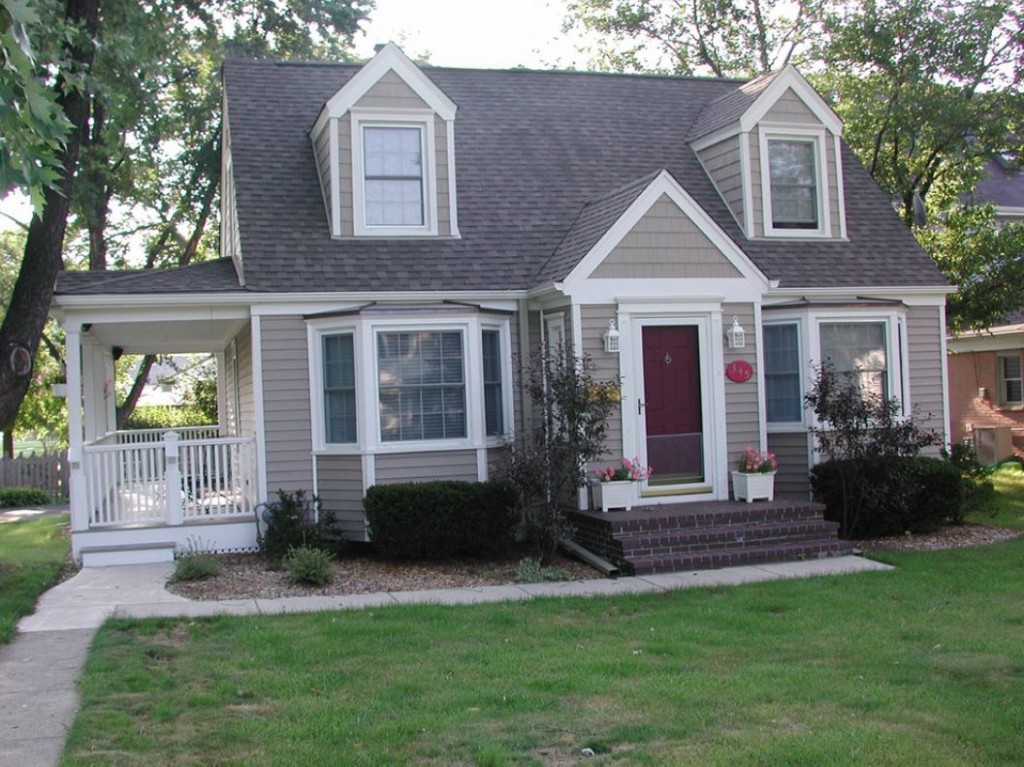 Vinyl Siding on a Cape Cod style home installed by
 See costs in your area


