Galvalume vs. Galvanized Steel Roofing – What’s the Difference?

If you are one of the many homeowners looking to install a steel roof on your home, understanding the difference between galvanized steel vs. Galvalume is essential to getting the top performance you expect from your new metal roof.

Right off the bat: In most residential steel roofing applications including near-coastal areas — beach homes located near the ocean shore, and even homes located in the middle of heavy salt-spray — severe marine environments, Galvalume steel will be a better and more corrosion-resistant option than G-90 galvanized steel.

The one exception when Galvalume should not be used: Galvalume steel should not be used on, in, or around concrete or mortar. Concrete and mortar are highly alkaline environments.

Did you know? Bare Galvalume steel and painted Galvalume sheets will suffer rapid corrosion when in contact with mortar and concrete. Bare galvanized G-90 steel and especially Kynar 500 painted galvanized G-90 steel will perform better in this type of environment.

Now, because aluminum, one of the two metals in Galvalume coating, provides a barrier protection for steel, instead of galvanic or self-healing protection in galvanized steel, scratches and cut edges in Galvalume are less protected.

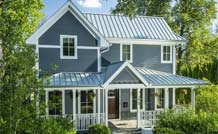
Galvalume steel is best for use in prefabricated metal wall panels and standing seam metal roof applications with concealed fasteners.

We would not recommend using Galvalume panels with exposed fasteners like corrugated or ribbed steel roofs.

Normally, Galvalume is offered in both bare and pre-coated (pre-painted) versions. Most residential-grade Galvalume metal roofing products – like galvanized steel – are coated with Kynar 500 or Hylar 5000 paint finishes.

New Shingle Roof

$7,500
Average price
New Metal Roof

$14,500
Average price
New Flat Roof

$8,225
Average price

See costs in your area Enter Your Zip Code

Galvalume has an excellent performance lifespan in bare exposures (unpainted panels) as well. Both galvanized steel and Galvalume weigh 100 to 150 pounds per 100 square feet and contain about 35% recycled steel post-consumer content.

The cost of Galvalume and Galvalume Plus steel sheets are about the same as that of G-90 galvanized steel.

A product called Galvalume Plus features an extra coating of acrylic. One advantage of Galvalume Plus is that it can be roll-formed dry, without vanishing oil. Thus, Galvalume Plus is very easy to form and install safely in the field, using portable roll-formers.

What is galvanized steel:

Galvanized steel was invented and developed for commercial use in the first half of the 19th Century, so it has nearly 200 years of proven track record. Carbon sheet steel is dipped in molten zinc. It’s more than a coating, however. A chemical bond occurs and produces the telltale “spangles,” the crystalline surface pattern found on galvanized steel.

Tip: Look for G-90 galvanized steel for residential applications not G-60

Read more

Pros & Cons of Atlas Shingles – Costs – Unbiased Atlas Roofing Reviews

Atlas is a top-five roofing shingle brand in ratings from pros and homeowners. Atlas shingles are a good value, which we define as reasonable price combined with quality that is above average.

Did you know? Online ratings don’t give the whole story for any shingle brand. Ratings on the brand’s website are unrealistically high, posted by happy customers in the first few months after installation – too soon to know how durable the shingles are.

Ratings on review sites are disproportionately low. Unsatisfied customers look for the chance to criticize the shingles. For example, on one prominent review site, Atlas received 49% 5-star ratings, 49% 1-star ratings and 2% in between. People love them or hate them. Yet, the brand was rated in the top few brands reviewed on the site.

We should also mention that Atlas, like other manufacturers including CertainTeed, GAF, Owens Corning and IKO, has been the subject of a class action lawsuit.

The suit against Atlas involved the Chalet line of shingles, no longer produced. The class action was dismissed. Some homeowners filed individual suits with various outcomes.

Read more

How Hurricanes and Wildfires Drive Demand for Metal Roofing and Why?

Demand for metal roofing is rising because there is compelling evidence it offers better protection from hurricane winds, hailstorms, and airborne embers from wildfires landing on the roofs of homes and commercial buildings.

A standing seam metal roof on the house

That theory has been tested in 2017 as the hurricane season has been among the worst in recorded history and wildfires in the West destroyed more than 8,400 structures in California alone and damaged countless more.

Related: How to Deal with Roof and Home Damage from Hurricanes like Irma and Harvey

About the forest fire season, Chris Wilcox of the National Interagency Fire Center said, “This one has been a longer season. It really hasn’t stopped since the fall of 2016”.

Let’s review the advantages of metal roofing using fire and wind data that supports the rise in demand.

Metal Roofing vs. Fire Flames

Max A. Moritz, fire ecologist at UC Berkeley, when discussing fire prevention says, “The most effective thing to consider is the roof.” Metal roofing has a Class A fire rating, the highest available. Roofing given this rating must withstand flames up to four hours and resist tests using 15 cycles of gas flame turned on and off.

While other materials including fiberglass mat composite asphalt shingles have a Class A rating, nobody in the industry suggests asphalt roofing materials offer the same level of protection against fire driven by wind.

The FEMA paper states, “Some roofing materials, including asphalt shingles… are often less resistant to fires than others.

When wildfires spread to homes or businesses, it is often because burning branches, leaves, and other debris buoyed by the heated air and carried by the wind fall on roofs.

If the roof of your property is covered with wood or asphalt shingles, you should consider replacing them with fire-resistant materials such as standing-seam metal roofing.”

When finished with PVDF-applied Kynar coating, standing-seam metal roofing meets the American Society for Testing and Materials ASTM-84 building materials test Zero Flame Spread Index and Zero Smoke Developed Index, tests most other roofing materials cannot meet.

Read more