The best roofing materials for residential solar panels are standing seam metal roofing and PVC membrane. Metal panels are the top choice for home solar panel installations on sloped roofs, while PVC membrane is preferred for low-slope and flat roofs.
A standing seam metal roof with integrated PV solar panels
However, asphalt shingles are, by far, the most common steep-sloped roofing system for home solar panel installations in the US, as approximately 80% of residential roofs are covered with composition shingles.
Need a Roofer?Get 4 Free Quotes From Local Pros:
Enter Your Zip Code:
For flat and low-slope residential roofs, EPDM rubber is one of the most prevalent roofing systems, while Tar-and-Gravel and BUR roofs are more commonly found on commercial roofs. That said, Tar-and-Gravel and BUR roofs can be a viable option for solar deployments on flat roofs, while the situation with an EPDM rubber membrane is a bit more nuanced.
Note: Although, a quality EPDM rubber roof can be a viable option for installing solar panels on a flat roof, it’s highly likely that a rubber roof will require some repairs or even a complete replacement some 10-15 years down the road, while most high-end PV solar panels are designed to continue generating electricity for 25 years. Therefore, going with an EPDM rubber roof for solar installations can be a risky bet, which is why we recommend a quality PVC membrane, instead, because it can last twice as long as EPDM rubber.
In the next section below, we explore top residential roofing materials and explain their suitability for home solar panel installations.
When building a new house or retrofitting an existing one, choosing the right type of a roof shape and style can be more difficult than most people realize.
Curved shed roof with standing seam panels on a ranch home.
Roofs do a lot more than just serving the most basic practical purpose of protecting a house and its occupants from the outside elements.
For instance, a roof’s shape plays a major role in defining the overall look and style of a house. Roofs can also provide additional living space, as well as make your home more resilient, energy efficient, and weather-proof.
This definitive guide to roof architecture and styles will help you understand and identify the best roof shape for your home, shed, garage, or a place of business. We will also explore recommended roofing materials for the common roof types.
Also known as pitched or peaked roof, gable roofs are some of the most popular roofs in the US. They are easily recognized by their triangular shape.
Pros: Gable roofs will easily shed water and snow, provide more space for the attic or vaulted ceilings, and allow more ventilation. Their inherently simple design makes it easy to build them and cheaper than more complex designs.
Cons: Gable roofs can be problematic in high wind and hurricane areas. If the frames are not properly constructed with adequate supports, the roof can collapse.
High winds can also cause materials to peel away from gable roofs. If there is too much of an overhang, winds can create an uplift underneath and cause the roof to detach from the walls.
Hurricane roof bracing and strapping for wind mitigation in Florida
If a gable roof is used in high wind areas, be sure proper braces are used and have the roof inspected after a large storm to ensure no damage has occurred.
However, if the roof also contains hips and valleys, it should either be shingled or roofed with metal shingles or standing seam to help prevent roof leaks.
Note: It is recommended to use at least a 10/12 pitch or 40° angle, for snowy regions.
Types of Gable Roofs
Side Gable: A side gable is a basic pitched roof. It has two equal panels pitched at an angle, meet at a ridge in the middle of a building. The triangle section can be left open for an open gable roof, or it can be enclosed for a boxed gable roof.
Crossed Gable: A crossed gable roof is two gable roof sections put together at a right angle. The two ridges are perpendicular to each other. Lengths, pitches, or heights may or may not differ from each other.
Cross-Gable Roof with Dormers covered by slate tiles
New Shingle Roof
$7,500 Average price
New Metal Roof
$14,500 Average price
New Flat Roof
$8,225 Average price
See costs in your area
Enter Your Zip Code
It’s an excellent roof design for homes with separate wings. Use a cross gable to accent different areas of the home, such as the garage, porch, or dormers.
It’s often seen in Cape Cod and Tudor styles houses.
Front Gable: A front gable roof is placed at the entrance of the house. This design is often seen in Colonial style houses.
Dutch Gable Roof: A Dutch gable is a hybrid of a gable and hip roof. A gable roof is placed at the top of a hip roof for more space and enhanced aesthetic appeal.
Solar panels use racking systems with several mounting options, and they can be used on most residential roofs. However, even if you have an adequate roof, finding the optimal orientation and layout for your panels is also very important. Ideally, you will want to use the roof areas with the most sunshine, while avoiding shaded areas as much as possible – even a small shadow can greatly reduce the energy output of your solar array.
Residential rooftop solar panels on the south-facing side of the roof/house.
On the other hand, some roof tiles may be damaged if your roof uses a brittle material like slate or clay. However, if you work with professional solar installers, the number of broken tiles will be minimal or zero.
Asbestos is the only roofing material that may limit your ability to add solar panels as most providers will not work on these roofs. Harmful fibers are released when manipulating asbestos, especially when drilling. These fibers are not only dangerous for the installers, but also for anyone living under that roof. If this is your situation and you plan to go solar, a complete and well-planned roof replacement is strongly recommended.


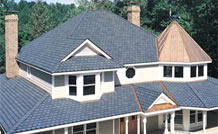 New Shingle Roof
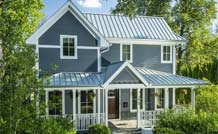 New Metal Roof
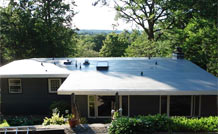 New Flat Roof
 See costs in your area
