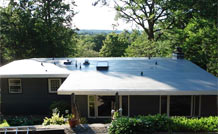
Hip Roof vs. Gable Roof – Pros & Cons of Each Type

Are you in the process of designing or building a new house or framing a roof? If so, chances are you are considering one of the two most popular roof types in the US, hip & gable. This guide will help you decide between a hip and gable roof for your new house, or an … Read more

Pros & Cons of Malarkey Shingles – Costs – Unbiased Malarkey Roofing Reviews

Malarkey asphalt shingles have a strong following among roofers, especially on the West Coast and in the Pacific North West.

Malarkey shingles also get good ratings from homeowners. The consensus is that Malarkey shingles are premium and high-quality products, more expensive than traditional asphalt roofing brands like Owens Corning and GAF, backed by above-average warranties.

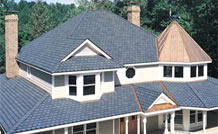
Malarkey Legacy Storm Grey Shingles

The brand has a reputation for quality over quantity, part of the reason it doesn’t enjoy the same name recognition as GAF and CertainTeed. Professional roofers on the West Coast know it, and we thought you should too, as you consider the best asphalt shingle brands.
New Shingle Roof

$7,500
Average price
New Metal Roof

$14,500
Average price
New Flat Roof

$8,225
Average price

See costs in your area Enter Your Zip Code

Are Malarkey Shingles the Right Choice for Your Roof?

Our research includes pros and cons, materials and installation costs, and a comparison Malarkey shingles with other popular composition shingle options in good, better, and best categories.

Pros

Here is why contractors, inspectors and homeowners give this brand ratings that are in the top tier of all shingle brands. Let’s start with what professional roofers like.

The Malarkey Secure Choice™ Roof System

While Malarkey shingles can be combined and installed with roofing products from other brands, professional roofers and homeowners have the choice of building a roof from the deck up with Malarkey products designed to work together as a complete system.

This brochure (PDF) shows the Secure Choice™ System with available options.

Did you know? When getting a new roof, it’s always a good idea to get at least three major components of a roofing system from the same manufacturer so that your roof can qualify for extended warranty coverage. To qualify and get the extended warranty, make sure your installer follows the manufacturer’s installation instructions, and registers the new roof on your behalf with the manufacturer.

Malarkey Secure Choice System

Read more

Rain Chains Cost, Materials, DIY Options & Styles in 2021

Rain chains demonstrate a beautiful blend of decorative form and useful function. Instead of water traveling from your roof through a closed downspout, rain chains allow you to enjoy rainwater’s pleasing sound and aesthetics, like a babbling brook cascading downward.

Rain Chains DIY Installation
via Hallmark Channel

In Japan, where rain chains had their origin, they are a common element of traditional building design. Gutters are viewed as too utilitarian to use when the function can be handled by something that also enhances the beauty of the structure. — That view is spreading, and the popularity of rain chains is growing in North America and around the world.

This buying guide provides a comprehensive overview of rain chain styles, materials, options, installation methods, costs, and DIY options.

The Basics

If you’re unfamiliar with rain chains, or kusari doi in Japanese, lets discuss their anatomy.

  • An adapter or bracket is attached to the gutter in place of a downspout
  • The rain chain hangs from it
  • The chain is anchored by a basin, stake, or weight

These three essential components might be sold separately, but many top manufacturers produce kits with everything included.

Cost

There is a wide range of rain chain prices, but they can be loosely grouped into these four categories that have some overlap:

  • $25-$55 | Cheap rain chains, fine chains, small design elements spaced widely, most often painted or coated steel or aluminum.
  • $55-$120 | Good-quality rain chains, larger and more design elements, most often copper, but some are brass, aluminum or stainless steel.
  • $120-$250 | High-quality rain chains, large, complex design elements, most often copper or stainless steel, a bottom bowl might be included.
  • $250-$700 | Best-quality rain chains, quite ornate, copper, zinc, and stainless-steel designs, often with a basin and stake included. The very finest rain chains are imported from Japan and cost in the upper end of this range.

How Much Do Accessories Cost?

The accessory options are weights, basins, and stakes:

  • Rain chain stakes: $15-$25
  • Rain chain weights: $25-$75
  • Rain chain basins: $50-$200 depending on the size, material and whether they’ve been handcrafted

Most Popular Styles

  • Chain links are interspersed with artistically designed cups or other features such as birds, leaves or flowers at intervals of a few inches to as much as a foot apart.
  • Most rain chain cups have holes in the bottom to allow water to pass through. Other chains are produced with shallow cups, and the rainwater fills the cup and spills over into the cup below.
  • Single links or another type of connector are used to hold each cup to the one above it, so that the rain chain is really a series of cups with little or no chainwork.
  • The rain chain is a series of decoratively fashioned links or loops, often of varying size and artfully interwoven, with no cups at all.

Because of the artistic nature of rain chain design, these three basic styles are produced in nearly limitless variations and combinations.

Traditionally, rain chains were crafted from metal, and most still are.

Most Popular Materials:

  • Copper: This is the traditional material choice of rain chain artisans. The copper must be polished regularly if you wish it to maintain its gleam. Most copper rain chains are allowed to develop an appealing patina finish that changes as the copper ages.
  • Steel: This is another traditional metal. Make sure any steel rain chain you consider is coated or painted to prevent rust, though corrosion is probably inevitable.
  • Stainless steel: This corrosion-resistant metal is often used by itself or in a rain chain design with copper.
  • Aluminum: More affordable than stainless, aluminum is durable and will develop a light patina too.
  • Brass: This material is a staple of plumbing fixtures because it resists corrosion. It’s an attractive choice for rain chains too.

Read more