Flat Roof Repair – How to Repair a Leaky Rubber Roof – DIY Guide

This guide covers the basics of flat roof repair, also known as low-slope roof repair, including:

  • Locating the leak
  • Repairing flat roofing
  • Knowing when replacing the roof is a better option
  • The cost of flat roof repair and replacement
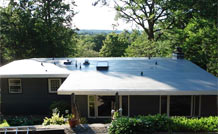
EPDM Rubber installed on a flat roof by GemTile

Need a Roofer? Get 4 Free Quotes From Local Pros:

Enter Your Zip Code:

If your home or building has a flat roof, then you know that water is its major nemesis and leaks must be aggressively addressed with top-quality flat roof repair materials and methods. We explore whether DIY flat roof repair is something you want to attempt or if it makes more sense to hire a professional flat roofing specialist.

These flat roof repair techniques can be used on the most common flat roof materials:

  • EPDM, aka Rubber
  • Modified bitumen
  • BUR (Built up roofing), aka tar and gravel
PVC roof repair

Note: If you happen to have a PVC or TPO roof leak, such as a leaky seam or a hole/puncture caused by a fallen tree branch or an accidental cut, then you will need to find a qualified specialist equipped with all the necessary tools and supplies; a roll of appropriate membrane and a heat air gun. Look for a company specializing in PVC or TPO.

Locating a Flat Roof Leak

While finding a leak in a flat roof is easier than on a steep-sloped, shingled roof, leaks can still be deceiving. Where water enters your interior space might not be exactly where the leak is, because any water that penetrates a roofing membrane can travel for some distance until it finds a seam in the sub-roof or sheathing and seeps inside.

These steps will allow you to isolate the source of the leak if it isn’t readily evident when you inspect the roof.

  • From inside, measure the distance from where the leak is visible to the two nearest walls.
  • Use those measurements on the rooftop to create a starting point for your search.
  • Most flat roofs are very slightly sloped to facilitate runoff, so explore from the point of the water’s entrance up the slope, since water runs downhill.
  • Look for punctures, popping screws, rips, worn spots, seam separations, blisters and other imperfections in the membrane.
  • If no damage is found in the membrane, examine nearby vent pipe boots, flashing, caulk around vents and similar structures for damage.
  • When you still cannot locate the leak, call a professional flat roof contractor for assistance and repair.

Caution: It’s always smart to respect ladders and heights, so proceed with extreme care! If you can’t access the roof from inside, use a quality ladder rated for more than your weight, and have a strong adult hold the ladder steady for you. If the roof is icy, even greater precaution is required, or a pro should be called in.
New Shingle Roof

$7,500
Average price
New Metal Roof

$14,500
Average price
New Flat Roof

$8,225
Average price

See costs in your area Enter Your Zip Code

Repairing a Minor Flat Roof Issue

Warranties for flat roofs can range from 5 to 20 years. If your roof is under warranty, call the contractor that installed it to make the repair. Even if the warranty is prorated for the age of the roof, you might still save money with pro repair. You’ll have the confidence the job was done correctly and have recourse if it wasn’t.

If the warranty is up, then you can attempt the repair yourself. If it holds, you’ve saved money; If not, you won’t make it worse with the methods we suggest, and a flat roof contractor can repair it.

Rubber Roof Repair Tools:

    • Roofing Seams Probing tool

    • Roofing Hand Roller tool

  • Roofing Membrane Cleaner
  • EPDM rubber glue
  • EPDM peel and stick roofing tape
  • Appropriate Ladder with ladder stabilizer
  • Paint brush used to spread the glue
  • Bucket of warm water and clean towels

Other tools you may need will depend on the roofing system in question and a specific problem you’re repairing. The common tools used for repairs include a utility knife ($3-$6), tube of roofing sealant or cement ($4-$6), a caulk gun ($5-$20), a 2” putty knife or brush ($1-$4) and peel & stick flashing ($35-$125/size of the roll).

EPDM repairs require a few specialty items including EPDM glue ($12/tube or $40/gallon), weathered membrane cleaner for older roofs ($12/quart or $25/gallon) and EPDM/TPO primer ($15/quart or $40/gallon).

EPDM Rubber Roof Repair Kit

Did you know? Rather than trying to get all of the above items individually, you can save a lot of time by getting an all-inclusive Rubber Roof Repair Kit here

Read more

Most Important Questions to Ask a Roofing Contractor Before Signing a Contract

Choosing a roofing contractor that will install your roofing properly is easily as important as using quality material. Most roofing contractors are reliable craftsmen, but when the economy is growing and/or there is a lot of work to be done, as in areas hit by recent hurricanes or hail, inexperienced roofers often look for a piece of the pie.

Need a Roofer? Get 4 Free Quotes From Local Pros:

Enter Your Zip Code:

This guide will arm you with the most important questions to ask a roofing contractor before hiring them. Quite a few sites list questions to ask contractors. We’re different because we also give details about what you should expect to hear from a legitimate roofing contractor that is worth considering for the critical work of roofing your home or business.

Note to hurricane victims: We recommend that you never hire a contractor that comes to you looking for work. Every established roofing contractor in your area has more work than it can handle. Roofing crews are flooding your area from across the country.

Many inexperienced roofers and con artists are going door-to-door looking for work or an easy dollar. Your first call should be to FEMA at (800) 621-3362. FEMA can supply you with a list of legitimate roofing contractors that have been screened to ensure they are experienced, licensed and insured. In some areas, FEMA is handling the arrangements for homeowners to have their homes repaired.

Questions to Ask a Roofing Contractor Before Signing a Contract

Your questions should start with general issues about the business and the roofing crew. If the contractor gives satisfactory answers to them, then asking specific questions about the materials, processes and schedule will help you narrow your search for a trustworthy roofing contractor.

General roofing contractor questions and appropriate answers:

Q: How long has the company been in business?

You want a roofer that has “seen it all,” i.e., repaired and installed hundreds of roofs like yours. The owner of the company should have at least 10 years in the roofing business as an owner, preferably, or at minimum working as a crew leader for someone else.

Q: Are you licensed, and can I have a copy of your license?

Most states require contractors to have a license issued by a state agency. In Michigan, for example, it is called the Department of Licensing and Regulatory Affairs (LARA). In California, it is the California State Licensing Board. When applying for the license, the roofer must demonstrate knowledge and adherence to building codes and proof of insurance.

Some states require that the contractor be bonded (see below). Most state licensing agencies allow homeowners to quickly verify online or by phone that the contractor’s license is current.

Q: What happens if a worker falls off my roof, or you damage my home? In other words, does the company have worker’s compensation insurance and liability insurance?

Worker’s compensation insurance covers the employees in case they are injured on the job. Without it, an injured worker is more likely to sue the homeowner to cover medical bills, lost wages and other damages.

Liability insurance covers you if the roofing company damages your home or your property. Some homeowner’s insurance policies won’t pay in such cases.

Read more

Top 10 Roof Dormer Types, Plus Costs and Pros & Cons

Roof dormers can improve architectural design of your home, add living space, and provide other benefits, but what are your options? How much does a roof dormer cost?

Need a Roofer? Get 4 Free Quotes From Local Pros:

Enter Your Zip Code:

This guide covers major dormer types and how much they cost to build. Before we delve into various dormer types, let’s quickly explore feasibility considerations and pros and cons of building a dormer:

Feasibility Considerations

Question: Is a roof dormer even feasible for your property?

Answer: It depends on the type of your roof frame; A stick-framed roof with an attic has room for adding a dormer, while a truss-framed roof doesn’t have any attic space to add a dormer to. You can still add a purely decorative make-believe dormer to a truss-framed roof, but not a real dormer.

The Pros

There are several good reasons for a roof dormer:

Dormers add architectural interest, accent, and detail: Having one or more dormers as part of a roof’s structure can boost the curb appeal of a home that might otherwise be a bit bland. The new design features can look good inside too. You’ll enjoy the improved aesthetics of your home, and the upgrade will make it more appealing to buyers, if you decide to put it up for sale. Dormers have an average return on investment or recouped value of 65-70 percent.

Roof dormers add light: If the dormer is built above living space rather than over an attic, or if you’re converting attic space to living space, then it provides much-needed natural light. Dormers are wonderful spots for a reading nook, kids play area, dressing area and other uses where extra light is a bonus.

Improved ventilation: Dormers are built in multi-story homes on upper floors where heat rises and air can become stale and stuffy. The dormer window allows for fresh air and better airflow to improve the ventilation and air quality.

More room and headspace: When dormers are large, such as a shed dormer that runs the length of a bungalow, a 1.5-story home, the increase in usable space can make a difference.

A room with a view: In addition to light, the dormer provides another view on the world outside.

Another potential exit: In emergencies, a dormer window provides an exit opportunity. This is especially important if the dormer window is the only exit in an attic roof. If you have a multistory home, a rope or chain ladder should be kept in a handy upstairs location.

The Cons

What should you be aware of before committing to a dormer?

Extra cost: Dormers require additional building materials and time — the inputs that increase the cost of construction. Getting the permit and hiring an architect, if necessary, boost costs not associated with simply tearing off shingles and installing a new set.

The cost will be slightly higher every time the home is reroofed due to additional materials and time requirements.

In 20-30 years, the window within the dormer will have to be replaced, another significant cost.

The best time to limit the cost of a dormer is when the home is being built. In existing homes, it is most cost-effective to add a dormer when a roof is being replaced.

Valleys: Most dormers create valleys on either side, and valleys are notorious for leaks because a higher volume of water runs through them. However, valley flashing materials are designed to prevent leaks, and experienced roofing contractors successfully roof valleys every day.

On our scorecard, dormers are ahead 6 to 2, so we think they’re worth the cost and risk, especially if you would like to add some visual appeal or additional living space to your home.

New Shingle Roof

$7,500
Average price
New Metal Roof

$14,500
Average price
New Flat Roof

$8,225
Average price

See costs in your area Enter Your Zip Code

Ten Types of Dormers and Their Costs

Here are the most common types of dormer for you to compare along with construction costs for each. As you will see, several dormer styles go by more than one name.

The costs provided in this guide are for the construction of the dormer frame and include average material costs for siding, windows and roofing. Architectural and building permitting costs can further increase your overall costs.

A roofing material you select can be a significant cost factor. For example, a tile roof will cost much more than a roof covered with shingles.

Note: the steeper the roof, the less the roof of the gable will extend out from the roof and the lower the cost of materials will be.

Arched top or barrel roof dormer:

Barrel Roof Dormers

via Custom Copper Works

A rounded top is the hallmark of this dormer type that has some wall space on sides and front. An arched or barrel dormer adds a soft contrast to the sharp, straight lines of most sloped roofs. This dormer type is less commonly called a segmental roof dormer.

  • Use notes: Arched/barrel dormers are usually for light and visual appeal rather than to produce more living space. Consequently, they tend to be smaller than some other styles.
  • Cost notes: A rounded roof takes more time to construct than a flat or gable roof
  • Arched roof dormer cost: $100-$150 per square foot or $4,000 to $6,000 total
  • Average cost and size: $4,650 for dormer 5’ wide x 8’ deep

Read more