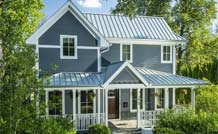
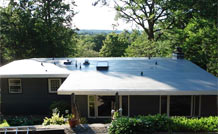
2022 Steel Roof Costs, Pros & Cons – Steel Roofs vs. Asphalt Shingles

For many decades, composition shingle roofs have been the overwhelmingly popular choice for new roof installations and re-roofing applications.

However, thanks to the rapidly growing consumer awareness of all the benefits of modern residential metal roofs, many savvy homeowners are now considering steel sheet panels and stamped tiles as a viable alternative to asphalt. Hence, it is hardly a surprise that metal, by and large steel, has become the fastest growing segment in the residential roofing market.

Why Steel Roofs?

Many homeowners concerned with aesthetic appeal are often positively impressed with the wide variety of contemporary styles, profiles, and vibrant colors available in modern steel roofing. Other benefits that help make steel roofs stand out among other roofing products, include low overall life-cycle cost, durability and longevity, superior energy efficiency, and sustainability.
New Shingle Roof

$7,500
Average price
New Metal Roof

$14,500
Average price
New Flat Roof

$8,225
Average price

See costs in your area Enter Your Zip Code

For anyone who wants their roof to be an asset for years to come, rather than it being a constant source of problems, steel roofing can be a wise choice.

Steel is Exceptionally Strong and Durable

Steel is one of the strongest, most durable building materials, which is why it is so widely used in commercial and industrial construction. Your home can benefit from superior durability of steel in several different ways; The inherent material properties of steel make it highly resistant to cracking, warping, curling, or peeling — all of these are common problems associated with asphalt shingles.

Did you know? A steel roof will not be susceptible to rot, decay, discoloration, mold growth or termite infestation. The superior durability of steel will free you from the expensive and time consuming maintenance and repair issues that are often a necessary part of owning most other types of roofing systems.

Read more

Asphalt Roofing Shingles: Costs, Pros & Cons – The Ultimate Guide

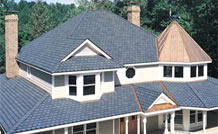
Asphalt shingles still dominate the US roofing industry, accounting for more than 70% of all residential, sloped roofs including new construction and replacements. That’s probably why you’re here – asphalt shingles are on the short list of materials you’re considering for your home, garage, or business.

Need a Roofer? Get 4 Free Quotes From Local Pros:

Enter Your Zip Code:

GAF Timberline HD Birchwood Architectural Asphalt Shingles on a Cross-Cable Roof with two dormers
Source: GAF

However, not all asphalt shingle roofing products are created equal. This guide will help you:

  • Understand the main types of asphalt shingles
  • Compare top products and brands from most popular manufacturers
  • Ultimately choose the best asphalt shingle type and style for your home

What are Asphalt Shingles?

There are many reasons for the popularity of asphalt shingles, and we’ll cover them in the pros and cons section, but the main reasons are low cost and ease of installation – the combination of low cost and fairly decent durability and longevity aka the value for the money.

Note: If you come across a discussion of organic shingles in your research, the information is likely quite old or encyclopedic. Organic shingles didn’t perform up to the expectations of quality and performance, so most manufacturers stopped making them in 2008.

Did you know? The longevity of any asphalt shingle product is determined by the shingle thickness and quality of construction. More on that below:

Composition of a modern asphalt shingle:

  1. Fiberglass mat: The core of today’s durable asphalt shingles is fiberglass mat. This material is chosen because it is lightweight, resists tearing, and holds asphalt very well.
  2. Asphalt: The fiberglass mat is run through a saturator tank where the glass fibers are thoroughly coated with hot asphalt, a petroleum-based material used for its strong resistance to moisture. The weight and toughness of the asphalt is useful for wind and hail impact resistance.
  3. Mineral granules: The part of the asphalt shingle that will be exposed to the elements is coated with mineral granules that are available in a wide range of colors.
    — Shingles can be given a single color to produce a solid-color shingle or a blend of colored granules for a more nuanced look.
    — The ceramic-coated granules also reflect the UV rays of the sun – the single worst threat to shingles.
  4. Sealant strips: Continuous or intermittent lines of raw asphalt are applied to the top part of each shingle that will be covered by the next layer installed. The sealant strip bonds the shingles together once they heat up in sun and warmth.

Did you know? The sunnier a climate is, the shorter the lifespan of the average shingle will be. One of the ways to extend the lifespan of an asphalt roof in a sunny climate such as Florida, Arizona, Texas, is to opt for a solar-reflective, light colored shingles designed to reflect solar radiant heat and UV radiation.

New Shingle Roof

$7,500
Average price
New Metal Roof

$14,500
Average price
New Flat Roof

$8,225
Average price

See costs in your area Enter Your Zip Code

Read more

Galvalume vs. Galvanized Steel Roofing – What’s the Difference?

If you are one of the many homeowners looking to install a steel roof on your home, understanding the difference between galvanized steel vs. Galvalume is essential to getting the top performance you expect from your new metal roof.

Right off the bat: In most residential steel roofing applications including near-coastal areas — beach homes located near the ocean shore, and even homes located in the middle of heavy salt-spray — severe marine environments, Galvalume steel will be a better and more corrosion-resistant option than G-90 galvanized steel.

The one exception when Galvalume should not be used: Galvalume steel should not be used on, in, or around concrete or mortar. Concrete and mortar are highly alkaline environments.

Did you know? Bare Galvalume steel and painted Galvalume sheets will suffer rapid corrosion when in contact with mortar and concrete. Bare galvanized G-90 steel and especially Kynar 500 painted galvanized G-90 steel will perform better in this type of environment.

Now, because aluminum, one of the two metals in Galvalume coating, provides a barrier protection for steel, instead of galvanic or self-healing protection in galvanized steel, scratches and cut edges in Galvalume are less protected.

Galvalume steel is best for use in prefabricated metal wall panels and standing seam metal roof applications with concealed fasteners.

We would not recommend using Galvalume panels with exposed fasteners like corrugated or ribbed steel roofs.

Normally, Galvalume is offered in both bare and pre-coated (pre-painted) versions. Most residential-grade Galvalume metal roofing products – like galvanized steel – are coated with Kynar 500 or Hylar 5000 paint finishes.

New Shingle Roof

$7,500
Average price
New Metal Roof

$14,500
Average price
New Flat Roof

$8,225
Average price

See costs in your area Enter Your Zip Code

Galvalume has an excellent performance lifespan in bare exposures (unpainted panels) as well. Both galvanized steel and Galvalume weigh 100 to 150 pounds per 100 square feet and contain about 35% recycled steel post-consumer content.

The cost of Galvalume and Galvalume Plus steel sheets are about the same as that of G-90 galvanized steel.

A product called Galvalume Plus features an extra coating of acrylic. One advantage of Galvalume Plus is that it can be roll-formed dry, without vanishing oil. Thus, Galvalume Plus is very easy to form and install safely in the field, using portable roll-formers.

What is galvanized steel:

Galvanized steel was invented and developed for commercial use in the first half of the 19th Century, so it has nearly 200 years of proven track record. Carbon sheet steel is dipped in molten zinc. It’s more than a coating, however. A chemical bond occurs and produces the telltale “spangles,” the crystalline surface pattern found on galvanized steel.

Tip: Look for G-90 galvanized steel for residential applications not G-60

Read more