They are the two most dreaded words in a homeowner’s vocabulary: a leaky roof. Water is the most insidious foe, eager to penetrate your home covering’s most vulnerable defenses. And once inside, the damage and destruction may be taking place far from the point of the initial attack, making the initial source of a roof leak difficult to identify.

The best homeowner defense is vigilance and fast action. Maybe a new roof is in the near future and it seems like a folly to bother with a leak.
However, even a small, out-of-the-way drip in a house that seems like nothing more than an inconvenience is a major repair bill waiting to happen!
Did you know? Roof leaks can ruin insulation, become a breeding ground for black mold, damage interior ceilings and walls, and rot the wooden framing.
So, let’s look at the ten of the most common culprits in causing your roof to leak and what you can – and should – do about them (other than recruiting a bucket brigade):
1. Villain: Age

Roofing materials, especially asphalt shingles, get old and tired. Expansion and contraction with the change in temperatures cause aging roof protection to turn brittle and eventually crack.
Years of harsh rays from direct sunlight can melt the tar that holds composition shingles together.
Father Time has not lost a battle yet and when roofing materials run up against their life expectancy, it will be time to budget for a new roof at the first sign of a leak.
2. Villain: Brick Chimneys
 Source: Roof.net
Have you ever seen house ruins from 200 years ago? The chimney is often the only thing standing. While brick chimneys may seem indestructible, the mortar that binds the bricks together is nothing more than a hard-working mixture of water, sand, and cement.
Exposed to the weather elements, the mortar can erode and crumble over time. Check the mud cap on top of the chimney for deterioration and inspect the mortared joints where the chimney enters the roof. If patches are required, it is a cheap and quick fix.
3. Villain: Failed Flashing
 Source: Runyon and Sons Roofing
Speaking of chimneys, compromised flashing is a common problem on a roof. Flashing are thin strips of metal installed at danger points for leaks around a roof. For a chimney, they are bent at a 90-degree angle to attach to both the roofing material and the brick chimney.
Flashing needs to be properly sealed to protect against water intrusion. It also needs to remain nailed in place and even if that is all squared away, the metal can rust or crack.
Expect the cost of replacing old flashing to run several hundred dollars per major penetration like chimney, depending on the job size and desired material (aluminum, lead, copper, steel, etc.).
Although it may be tempting to marshal the forces of caulking and roof cement in the battle against faulty flashing, this would be only a temporary solution best reserved for situations where you know the roof will soon be replaced.
Read more

 Zinc House by Jose Garia
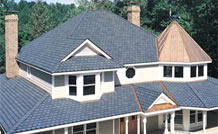 New Shingle Roof
 New Metal Roof
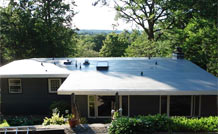 New Flat Roof
 See costs in your area
