
IKO asphalt shingles enjoy moderate sales volume across the US and have been one of Canada’s top brands. Most IKO shingles are sold directly to roofing contractors through building materials suppliers and distributors like Bradco, ABC Supply, Beacon Supply, and Harvey’s Industries. IKO products are generally not sold retail to the public.

Need a Roofer? Get 4 Free Quotes From Local Pros:
Enter Your Zip Code:
Did you know? Some IKO shingles consumer ratings are poor, dragged down by the widespread failures of organic shingles that are no longer being produced. Similar failures associated with the organic-base mat used in shingles (since replaced by the fiberglass base mat industry-wide) had also impacted other large brands in the roofing industry. Like GAF and CertainTeed, IKO was the target of class action lawsuits in the US and Canada.
However, the defective shingle lines are no longer produced and IKO has been working on improving their roofing shingle formulations across the board. It’s worth noting that reviews of IKO shingles in the past few years have been more favorable.
We mention this upfront because the lawsuits appear in online search results for IKO shingles. Homeowners who had the defective shingles installed despise the company. The remaining reviews and ratings from homeowners are about average compared with other top brands. Warranties are slightly above average, as discussed below.
Average Roof Replacement Cost:
|
Low End
$7,500Mid-Range
$10,500High End
$14,500 |
|
|
 See costs in your area
Are IKO Shingles the Right Choice for Your Home?
This guide provides a critical look at the current lineup of IKO shingles from the perspective of homeowners, home inspectors, and roofing contractors.
We believe this is the best approach to getting a well-rounded view of any shingle brand. It’s how we structured our reviews of GAF and Malarkey shingles among others.
Pros
Here are the advantages offered by this brand from various perspectives.
There are two reasons roofers suggest IKO products:
1. IKO PROFORMAX™ Integrated Roofing Accessories
A roof is far more than the outer covering of shingles. It’s built from the deck up using multiple components that work together to effectively shed rainwater and keep your home protected from nature’s elements.

IKO’s PROFORMAX™ system is comprised of four integrated roofing accessories designed to provide a multilayered roof protection that starts underneath the shingles, working from the outer edges of the roof deck upward.

IKO recommended accessories are designed to address some of the most vulnerable areas of the roof, such as the edges (eaves and rakes) where the roof’s deck and fascia or rake boards meet.
IKO PROFORMAX™ Integrated Roofing accessories include:
- Deck Protection – GoldShield™, ArmourGard™, IKO StormShield® Ice & Water Protectors, and IKO GoldSeam™ Roof Sealing Tape
- Underlayments – RoofGard-Cool Grey® or Stormtite® Non-Breathable Synthetic Underlayments
- Starter Shingles – Leading Edge Plus™ or EdgeSeal® Roof Starters
- Ridge Cap Shingles – Hip & Ridge Series or IKO Ultra HP® Cap Shingles
Deck Protection: Ice & Water Protectors
Many areas require a prescribed zone of Ice and Water protection under shingled roofs to prevent water infiltration due to ice dams and wind-driven rain. Check your local building codes to determine what is needed in your region.
IKO recommends Ice & Water protection for the roof deck at the eaves, rakes, hips, valleys, and around protrusions like vents and vent pipes, chimneys, dormers, and skylights.
- GoldShield™ – A premium Ice & Water membrane that forms a protective seal around each nail or fastener leaving no space where water can drip through.
- ArmourGard™ – A midrange product comprised of modified bitumen membrane that is applied as a protective layer under shingled roofs.
- StormShield® – An economical Ice & Water membrane comprised of modified bitumen for protection from wind-driven rain and ice dams.
Fascia and Eaves: Roof Sealing Tape
- IKO GoldSeam™ – IKO recommends applying roof sealing tape where the fascia and eaves meet, and over the seams of plywood sheets or OSB boards comprising the roof deck, before installing synthetic underlayment.
Our view is that applying the roof sealing tape over the gap where the eave and fascia board meet will deliver solid value and aid in extending the longevity of the eave and fascia board by blocking moisture and wind-driven rain, thus helping prevent rot.
Applying roof sealing tape over the seams of the plywood might also deliver some incremental value, especially if there are uneven surfaces (different heights) in between the sheets of plywood or OSB board. That said, in many ways, this step can be seen as redundant, especially on steeper roofs with smooth deck surfaces. Very few contractors actually install a roof sealing tape over plywood/OSB board seams, but it definitely won’t hurt.
Synthetic Underlayments
Underlayment serves a purpose of providing a secondary level of protection aka “roof underneath the roof”. It also helps prevent asphalt shingles from getting baked onto (or “glued”) to the roof deck in the sweltering heat of summer, when the sun can literally bake asphalt shingle onto the roof deck by melting the asphalt above the deck, especially on poorly vented roofs/attics.
- RoofGard-Cool Grey™ – In addition to providing convenient reference lines to keep shingle courses straight, the synthetic material adds a layer of protection between the deck and the shingles. This non-breathable synthetic underlayment provides a superior slip-resistant surface on which to work.
- Stormtite™ – IKO’s economical non-breathable synthetic underlayment option. It’s significantly stronger than traditional roofing felt and easy to install.
Note: IKO Roofgard-cool grey brochure mentions that “this product is a vapor retarder, so the air space beneath the roof deck should be properly and thoroughly ventilated to avoid risk of moisture condensation”.
Pro Tip: Use a breathable synthetic underlayment whenever possible!
Our view is that you should try to avoid using synthetic underlayments that are non-breathable vapor barriers (unless your roof’s deck and attic space are very well vented) because non-breathable underlayments can trap moisture between the roof deck and the space underneath the underlayment.
The trapped moisture can eventually cause the roof deck to rot underneath the underlayment, especially in poorly vented attic spaces. Imagine a roof deck or substrate failing due to moisture-induced rotting while the outer roofing system is still in good shape.
Starter Shingles
IKO recommends the use of roof starter shingles designed to be used with the first course of shingles.
Double-sided starter rolls that use high-strength sealant are a newer option that provides enhanced protection from wind uplift at the critical first course of shingles along eaves, as well as on rake edges.
- Leading Edge Plus™ or EdgeSeal™ starter shingles are installed at eaves and rakes as an extra line of defense where it’s needed most.
Ridge Cap Shingles
IKO’s specially constructed ridge cap shingles are designed to provide a high-quality alternative to using cut-up roof shingles to protect hips and ridges. The precut cap shingles include pre-tapered headlaps and add dimension, depth, and texture to a roofline (ridges and hips).
- UltraHP® / UltraHP® IR give roofers choices for matching the profile of the shingle.
The above listed product components and accessories are compatible with most IKO shingle lines, but there are some exceptions like the ridge cap product that is specific to Nordic shingles.
Did you know? In order to be covered by IKO’s ROOFPRO Extended Iron Clad Protection warranty, IKO shingles must be used and installed together with at least three IKO PROFORMAX Integrated Roofing Accessories. See the warranty documents for details.
The above requirement is standard for most brands. For example, manufacturers like GAF, require that at least three other qualifying GAF components to be used in conjunction with GAF shingles to make your roof eligible for the extended warranty coverage.
While it could be argued that these requirements help a roofing manufacturer maximize material sales per re-roofing job, our view is that the use of the manufacturer recommended, compatible accessories can help ensure a longer lifespan of the new roof, which helps justify the extended warranty coverage from the manufacturer.


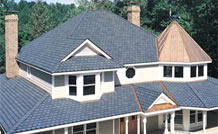 New Shingle Roof
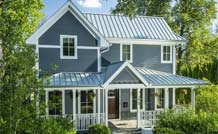 New Metal Roof
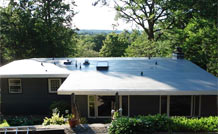 New Flat Roof
